
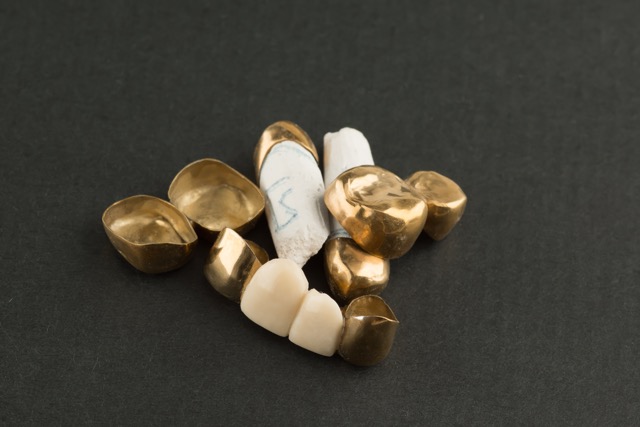
You’ve probably seen it happen. Someone stops by on a regular schedule, chats with the front desk, and offers cash for the jar of old crowns and grindings in the back. The whole process takes five minutes. But convenience has a price, and in dental scrap, the practice usually pays it. This article explains why an in-office offer is a guess rather than a valuation, what risks come with it, and how to find out what your scrap is really worth.
Why an In-Office Offer Is Only an Estimate
Most dental scrap isn’t marked with its purity, and a crown’s gold, platinum, palladium, and silver content can’t be determined by sight or by weight. A buyer standing in your office can weigh the material and run a quick surface test at best. Because they’re the ones taking the risk of guessing wrong, the offer includes a cushion, and that cushion comes out of your payout.
A dental scrap refiner works differently. Your lot is melted and mixed into a homogenous sample, then assayed in a lab, so the payout reflects the metal that’s actually in the material. As we covered in Finding Hidden Value, cash buyers commonly offer only a fraction of the true value, and they often overlook platinum, palladium, and silver entirely.
Three Risks Beyond the Price
- There’s No Paper Trail
A cash sale typically ends with an envelope and a handshake. There’s no breakdown of weight, metal content, or how the number was reached. If you have ever wondered whether the offer was fair, you have nothing to check it against. - It Creates a Security Gap
Scrap is small, valuable, and easy to take. When an outside buyer has a friendly relationship with your team, it becomes harder to control who handles your scrap, who gets paid, and where the money goes. A written policy that only the doctor makes the decisions concerning the dental scrap closes that gap. - You Have No Benchmark
If you only sell to one buyer, you can’t tell whether the offer was strong or weak. You’re relying on trust without any way to verify it.
Test the Offer: The Split-Lot Method
You don’t have to take anyone’s word for it, ours included. Here’s an easy way to compare:
- Save your next batch of scrap and mix it well
- Ask the in-office buyer what they’d offer, and write it down
- Divide the mixed material into comparable lots
- Send one lot to a dental scrap refiner and compare the assay report and payout against the cash offer
Keep the lots well mixed and similar in composition, otherwise the comparison won’t be fair. Any reputable refiner should welcome the comparison.
When a Quick Sale Might Make Sense
If you have a very small amount of material and no practical way to ship it, a quick cash sale can be a reasonable decision. Just make it knowingly: you’re paying a discount for the convenience. For practices that accumulate scrap steadily, the gap between an estimate and an assay tends to grow with volume.
What to Look for in a Refiner
When you compare options, look for:
- A clear statement of weight, assay results, and payout calculation
- Payment for every precious metal in your scrap, not just gold
- Secure, insured shipping and trackable handling
- Prompt payment and a real person to call with questions
Cora Refining supplies secure refining kits and free insured shipping, and every lot comes with a detailed breakdown of the metals found and their individual weights, so you can see exactly how your payout was determined.
Know What Your Scrap Is Worth Before You Sell
A cash offer is a price, not a verdict on what your scrap is worth. Before you accept one, find out what an assay would show. A little organization up front can mean a meaningfully larger return for your practice.